Getting Started
The writings of Karl Marx, Frederick Engels, and V.I. Lenin form the theoretical foundation of Marxism-Leninism — the political and ideological framework that guides the South African Communist Party.
For over a century, these texts have shaped the thinking and practice of communist and workers’ parties around the world. They remain as relevant today as when they were first written, not as templates for current theory and practice (praxis), but as material to adapt and develop for the Party’s own theoretical approach to current struggles.
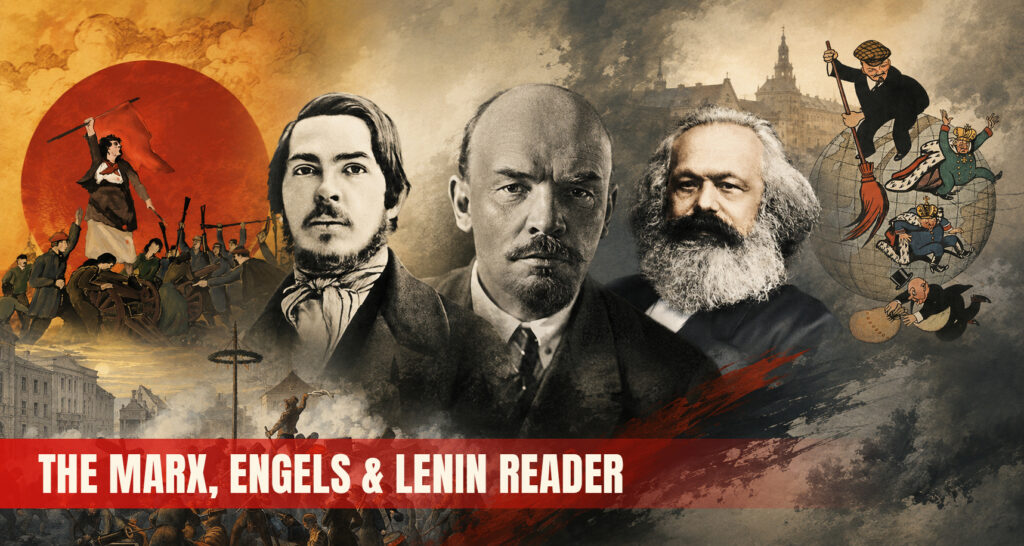
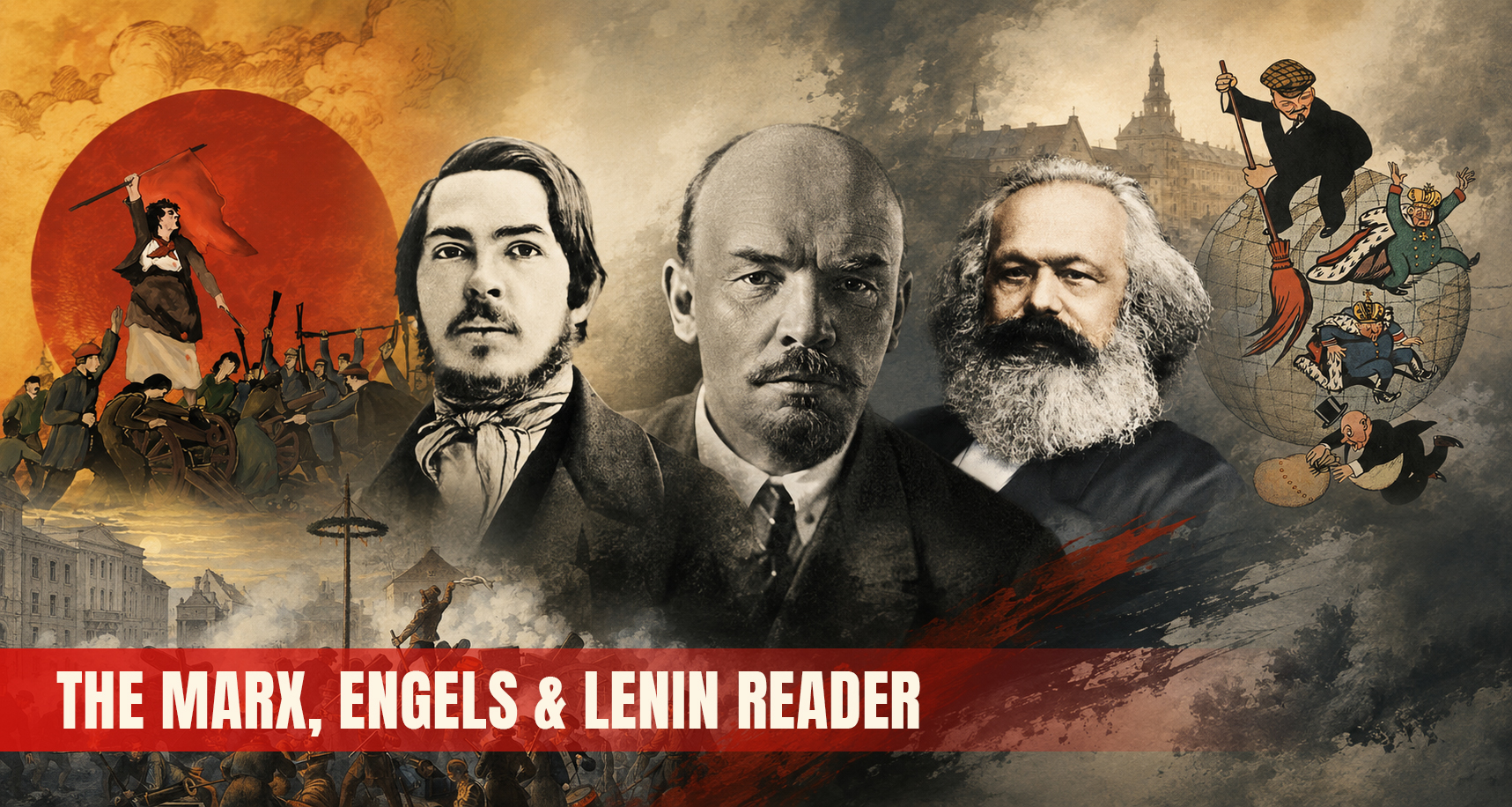
This Reader brings together extracts from the key works of Marx, Engels, and Lenin. It has been compiled to support the SACP’s political education work and can be used in a number of ways: as a framework for structured political education courses, as a reference source for cadres and activists, and as a guide for independent self-study.
At its heart, it is a resource of original source material — the actual words of the founders of Marxism-Leninism, not summaries or second-hand accounts.
Reading primary texts matters. There is no substitute for engaging directly with the ideas as Marx, Engels, and Lenin themselves expressed them. Too often, political education relies on simplified versions or brief quotations lifted out of context.
While these have their place, they can never fully replace the experience of reading the original works. This Reader is an attempt to make that experience more accessible.
Some of these texts can seem dense and difficult at first. They were written in different historical periods, in response to specific political and intellectual debates that may not always be immediately familiar.
However, we have chosen extracts from works that are generally accessible and that are ‘living’ texts. The goal has been to identify passages that are engaging, readable, and of direct relevance to the SACP’s understanding of Marxism-Leninism and its application to South African conditions.
Where possible, extracts have been chosen that speak clearly and powerfully — texts where the force of the argument comes through even on a first reading.
The Reader is organised to move through the major themes of Marxist-Leninist theory: the materialist conception of history, the critique of capitalism, the class struggle, the theory and practice of the party, the state, imperialism, and the path to socialism.
This structure allows the Reader to be used flexibly — whether working through it systematically or turning to specific sections as the need arises.
Political education is central to the SACP’s work as a vanguard party. Theory and practice cannot be separated. The struggle to understand the world and the struggle to change it are part of the same process.
Lenin’s insistence that there can be no revolutionary movement without revolutionary theory was not an abstract point — it was a practical lesson drawn from the experience of the working-class movement.
This Reader is offered in that spirit, as a channel to engage seriously with the ideas that have guided and continue to guide the communist movement, and – what’s more important – to create a new revolutionary praxis for the 21st century.
Continue Reading